


-
 Car Safety Seat 1 × $940.00
-
 Bus Safety Hammer 1 × $899.00
-
 Car Steering Wheel 1 × $756.00
-
 Transponder Car Key 1 × $723.00
-
 Safety Hand Glove 1 × $1080.00
Subtotal: $4398.00


Magazines cover a wide subjects, including not limited to fashion, lifestyle, health, politics, business, Entertainment, sports, science,
Car Safety Seat 1 × $940.00Bus Safety Hammer 1 × $899.00Car Steering Wheel 1 × $756.00Transponder Car Key 1 × $723.00Safety Hand Glove 1 × $1080.00Subtotal: $4398.00

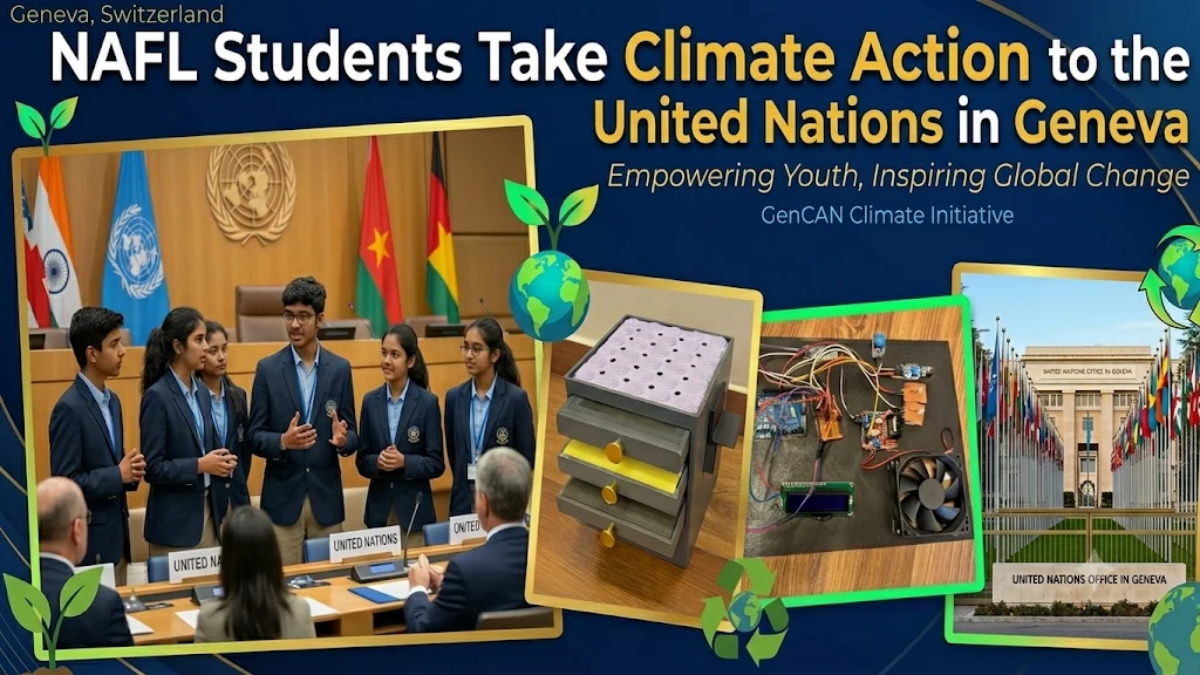
NAFL students bring their climate innovation projects to the United Nations in Geneva, showcasing student-led ideas and initiatives for climate action.
Students of the National Academy for Learning (NAFL), Basaveshwarnagar, Bengaluru, are preparing to showcase their climate action projects at the United Nations in Geneva this November. The two initiatives, Project Niraa and Project Urja, focus on water conservation and energy efficiency, demonstrating how student-led innovation can contribute to addressing environmental challenges. Supported and mentored by 1M1B (One Million for One Billion), a UN-accredited non-profit organisation, the teams are participating in Youth Climate Diplomacy under the 1.5 Matters campaign, which promotes youth participation in global climate action.
Project Niraa introduces AquaStep, a working prototype designed to collect, filter, and store greywater from kitchen sinks and showers for non-drinking purposes. During five weeks of household testing, the students conserved approximately 1,000 litres of water. The team plans to deploy 50 AquaStep units, with an estimated potential to conserve 3,750 litres daily and 1.5 million litres annually.
Project Urja addresses unnecessary electricity consumption, particularly in commercial spaces. The students have developed a hardware device that detects human presence and automatically controls lights and fans to reduce energy wastage.
The initiative has also achieved wider community engagement:
NAFL Mentor Principal Mrs. Indira Jayakrishnan described the opportunity as an important milestone in nurturing environmentally conscious and socially responsible young leaders. The projects highlight the growing importance of experiential learning, scientific thinking, and technology-led problem-solving in schools. They also demonstrate how educational institutions can encourage students to move beyond theoretical knowledge and develop solutions with measurable community impact.
As sustainability becomes an increasingly important consideration across industries, initiatives like these offer valuable opportunities for students to understand environmental responsibility early on.
EducationToday recognises the significance of connecting classroom learning with global challenges. The NAFL students' participation in Geneva demonstrates how schools can create platforms for young innovators to contribute to conversations on sustainable development.
NAFL students bring their climate innovation projects to the United Nations in Geneva, showcasing student-led ideas and initiatives for climate action.
Project Niraa introduces AquaStep, a working prototype designed to collect, filter, and store greywater from kitchen sinks and showers for non-drinking purposes. During five weeks of household testing, the students conserved approximately 1,000 litres of water. The team plans to deploy 50 AquaStep units, with an estimated potential to conserve 3,750 litres daily and 1.5 million litres annually.
Daily News published on 20 November 2026 by EducationToday.
This Daily News is written for readers looking for the latest education updates.
Your comment will appear on the website only after admin approval. Required fields are marked *
Comments (0)
No approved comments yet. Be the first to leave a comment.